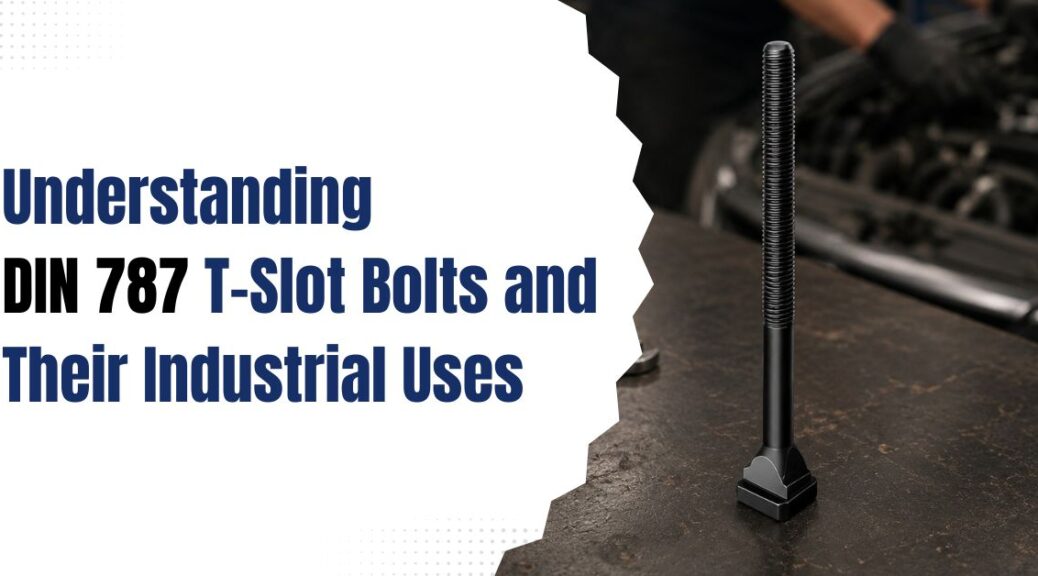
Anyone who has spent real time around a machine table knows this already: the setup is everything. A solid cut starts long before the spindle turns. If the workpiece shifts even slightly under load, tolerances disappear fast, tooling suffers, and the whole operation turns into a headache nobody in the shop wants to deal with twice. That’s exactly why DIN 787 fasteners still hold their place in serious machining environments. They’re purpose-built for clamping systems where movement isn’t an option. At George H. Seltzer & Co., we supply metric DIN 787 T-slot bolt assemblies designed for demanding industrial use, including complete sets of T-slot nuts and bolts.
What Makes Metric DIN 787 T-Slot Bolts Different?
At a glance, they don’t look particularly complicated. But good workholding hardware rarely does.
Metric DIN 787 T Slot bolts are engineered specifically for machine tables with T-slots, commonly found on milling machines, CNC equipment, fixture plates, and heavy fabrication setups. The head is forged rather than loosely machined, which matters more than people sometimes realize. Forging creates a denser grain structure and a stronger part overall, especially under repeated clamping pressure.
The guide faces are milled so the bolt seats properly inside the slot without wandering during tightening. Threads are rolled instead of cut, giving the fastener better fatigue resistance over time. That detail alone can add years of usable life in high-cycle production environments.
Our metric assemblies are supplied with matching nuts and washers, which saves machinists from piecing together mismatched hardware during setup. The bolts are heat-treated to strength class 8.8, and each head is marked with both the AMF symbol and strength designation for quick identification on the shop floor.
And yes, additional sizes are available when standard dimensions won’t cut it. That happens more often than catalogs admit.
Why Shops Still Rely on T-Slot Hardware
There’s a reason T slot systems haven’t disappeared despite all the advances in modern workholding. They’re adaptable, durable, and surprisingly hard to beat for certain setups.
A properly fitted set of T slot nuts and bolts gives machinists the flexibility to secure odd-shaped parts, large castings, fixture plates, or temporary tooling without redesigning an entire setup. In repair shops and custom fabrication environments, especially, that flexibility becomes invaluable.
You’ll find DIN 787 hardware used in:
- CNC machining centers
- Manual milling machines
- Tool and die shops
- Steel fabrication facilities
- Heavy equipment manufacturing
- Welding fixture tables
- Industrial assembly systems
Some shops run the same T-slot hardware for years. Not because they ignore maintenance, but because good fasteners hold up when they’re made correctly.
The Small Details Actually Matter
Cheap clamping hardware tends to reveal itself slowly. First, the threads feel rough. Then the fit inside the slot loosens up. Eventually, operators start over-tightening just to compensate, which usually creates a different problem altogether.
That’s why details like rolled threads and precision-machined guide faces matter so much in T slot nuts and bolts. They reduce unnecessary wear and help distribute clamping pressure more evenly across the setup.
A bolt that stays seated properly inside the slot also reduces side loading during heavy cuts. Experienced machinists notice that immediately, especially during aggressive milling passes or vibration-heavy operations.
At George H. Seltzer & Co., we’ve worked with enough industrial buyers to know that reliability matters more than flashy specifications. Shops want hardware that fits correctly, tightens consistently, and survives real production work without becoming disposable after six months.
Choosing the Right T Slot Bolt
Sizing mistakes are more common than people think. A bolt may technically fit the slot but still fail to provide proper engagement or clamping stability.
Before selecting hardware, it’s important to verify:
- Slot width
- Thread diameter
- Required clamping height
- Load conditions
- Machine table compatibility
Strength class matters too. Heat-treated class 8.8 hardware offers dependable performance for a wide range of industrial applications without becoming brittle under repeated use.
If a standard size doesn’t match the setup, custom sourcing is often the better option rather than forcing an imperfect fit.
Built for Real Shop Conditions
Industrial fasteners don’t need marketing language. They either perform or they don’t.
At George H. Seltzer & Co., we supply Metric DIN 787 T-Slot Bolts for machine shops, fabrication facilities, and industrial operations that depend on secure workholding every day. Our metric assemblies are built for real life applications in challenging conditions where setup accuracy, clamping force, and long term durability are critical. When you need reliable fastening hardware for machining, call George H. Seltzer & Co. to talk about stock, specific sizes, and assistance from experienced T-slot bolt and nut manufacturers.
Also Read: Why Set-Up Wedges Are Essential for Accurate Clamping.
FAQs
They’re used to secure fixtures, tooling, and workpieces onto machine tables with T-slots, particularly in machining and fabrication operations.
Forged bolts handle repeated clamping stress better than standard machined fasteners and generally provide greater structural strength.
Rolled threads improve fatigue resistance and reduce thread wear during repeated tightening cycles.
Yes. George H. Seltzer & Co. supplies metric T-slot bolts with compatible nuts and washers.
Yes. Additional sizes can often be sourced for specialized machine tables or fixture requirements.