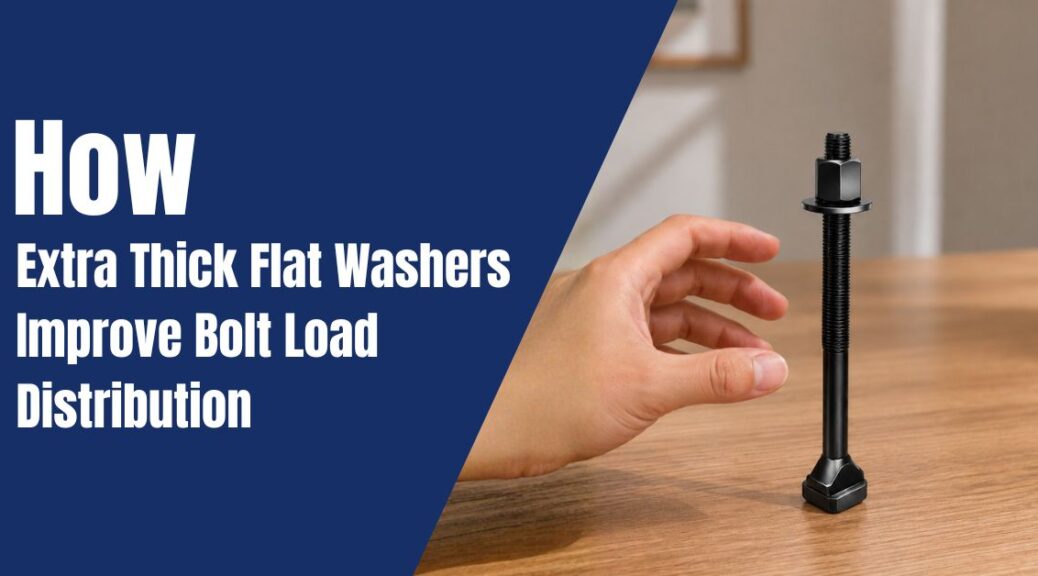
In heavy-duty assemblies, the washer sitting beneath the bolt head or nut often determines whether the clamping force stays stable or slowly starts damaging the surface underneath. Standard thin washers can flex, cup, or concentrate pressure into a small area, especially under high torque. That problem shows up everywhere from machine tables to structural assemblies. Extra Thick Steel Washers solve it by spreading the load more evenly across the contact surface, reducing localized stress and improving joint stability over time.
At George H. Seltzer & Co., we supply industrial-grade machined washers built specifically for demanding applications where customers need to buy extra-thick flat washers that hold up under real working conditions.
Why Load Distribution Matters?
Every bolted connection creates pressure. The moment a fastener is tightened, force transfers through the bolt head or nut into the material below it. If that force is concentrated into too small an area, problems start appearing quickly.
You’ll often see:
- Surface deformation
- Bolt embedment into softer materials
- Uneven clamp pressure
- Premature loosening
- Distortion around oversized holes
A washer’s primary job is to spread that load across a wider surface area. The thicker and more rigid the washer, the better it resists deformation while maintaining consistent pressure distribution.
That’s one reason experienced machinists and maintenance crews regularly buy extra-thick flat washers instead of relying on lightweight stamped hardware.
What Makes Extra-Thick Flat Washers Different?
Not all washers are manufactured the same way. Thin stamped washers are perfectly acceptable for lighter-duty applications, but industrial setups place very different demands on fastening hardware.
The extra thick steel washers supplied by George H. Seltzer & Co. are machined from 12L14 cold-rolled steel bar rather than stamped from sheet metal. That difference matters because machined washers maintain better rigidity under load.
Additional design features include:
- Beveled edges for cleaner seating
- Precision-machined surfaces
- Oversized inside diameter, typically 1/64″ to 1/32″ larger than the bolt diameter
- Optional case hardening for increased wear resistance
When customers buy extra-thick flat washers for machining fixtures, fabrication setups, or structural assemblies, they’re usually trying to solve one issue: maintaining clamp integrity under pressure.
And honestly, thinner washers just don’t always survive those environments very well.
How Thickness Improves Performance?
Thickness changes the way force travels through the joint.
A thicker washer resists bending and distributes the clamp load across a broader contact area. That reduces pressure concentration directly beneath the bolt head or nut. In practical terms, it helps protect the mounting surface while maintaining more stable fastener tension.
This becomes especially important in:
- CNC machine fixtures
- Heavy equipment assemblies
- Structural steel fabrication
- Agricultural machinery
- Hydraulic systems
- Repair and maintenance operations
In machine shops, repeated tightening cycles can destroy low-quality washers surprisingly fast. Once a washer deforms, the clamp load becomes inconsistent. Operators often compensate by overtightening the bolt, which usually creates another failure point somewhere else in the assembly.
That cycle is one reason industrial buyers continue to buy extra-thick flat washers for demanding clamping applications.
Better Support Around Oversized Holes
Extra thick steel washers also perform better when dealing with oversized or worn mounting holes.
A thin washer can flex into the unsupported space around the hole opening, especially under heavy torque. A thicker machined washer stays flatter and provides more stable surface support.
The oversized inside diameter built into our washers also improves fitment during installation. That small amount of clearance allows smoother bolt alignment without excessive movement inside the assembly.
At George H. Seltzer & Co., we’ve worked with enough industrial maintenance teams to know that details like this matter more on the shop floor than they do on paper.
Built for Industrial Fastening Applications
Industrial fastening hardware doesn’t need flashy claims. It needs to perform consistently after hundreds of tightening cycles, vibration exposure, and years of production use.
At George H. Seltzer & Co., we supply machined fastening components designed for practical industrial environments where reliability matters. Our extra-thick flat steel washers are manufactured for load distribution, durability, and long-term clamp stability across machining, fabrication, maintenance, and heavy equipment applications. If your operation requires dependable fastening support, contact George H. Seltzer & Co. today to request specifications, availability, or assistance selecting the right products when you need to buy extra-thick washers for demanding industrial setups.
Also Read: How Professional Builders Use T Slot Bolts for Faster Assembly in Machine Tool Setups.
FAQs
An extra-thick flat washer distributes the load of a threaded fastener more evenly across the mounting surface while resisting deformation under high clamp pressure.
The washers supplied by George H. Seltzer & Co. are machined from 12L14 cold-rolled steel bar.
Beveled edges help improve seating and reduce sharp edge contact during installation and tightening.
The inside diameter is intentionally slightly larger than the bolt size to allow smoother installation and proper bolt clearance.
Yes. Case hardening is available for an additional charge when increased surface hardness or wear resistance is needed.